- HOME - ABOUT US
The Story Behind
About Nutandhara Foundation
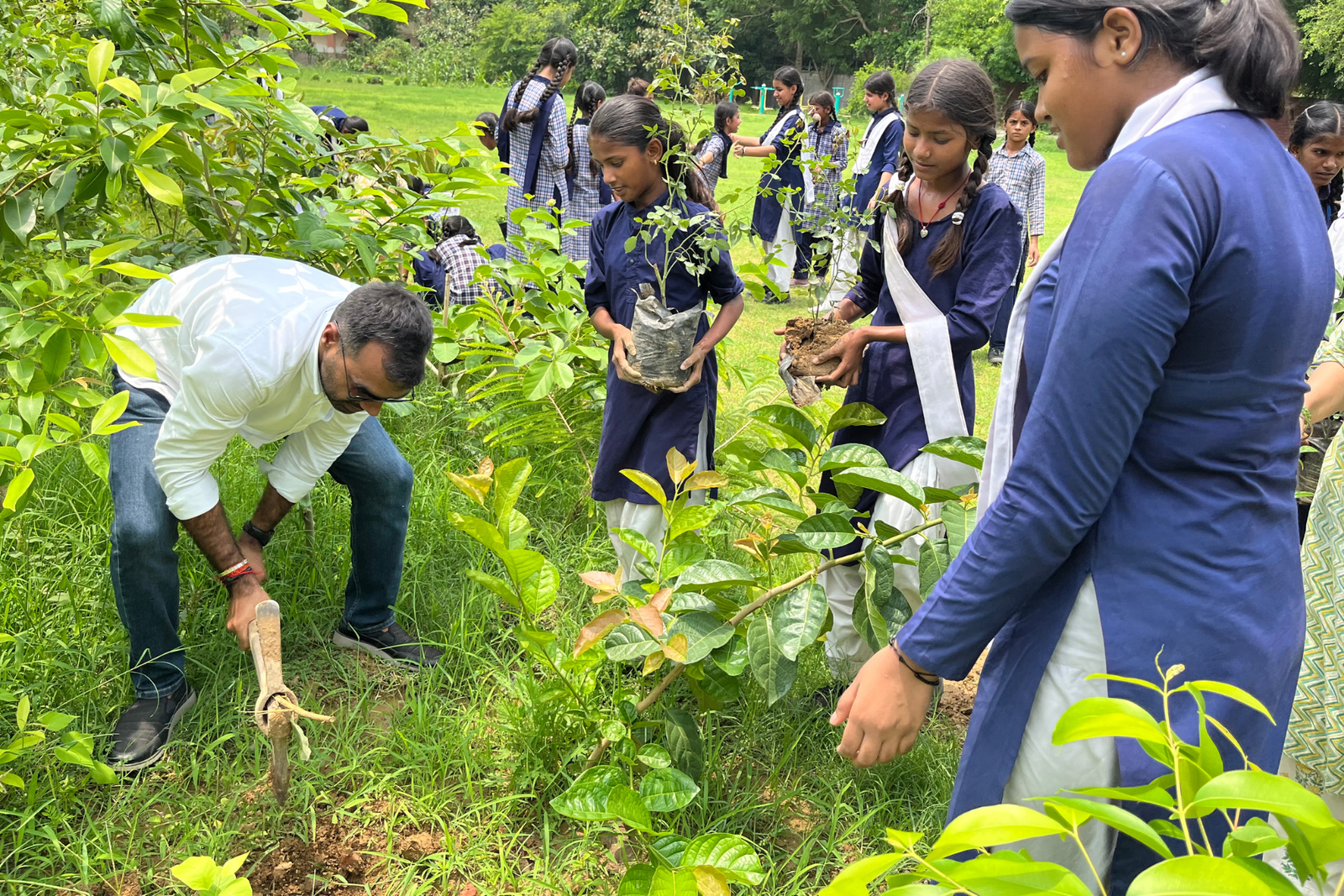
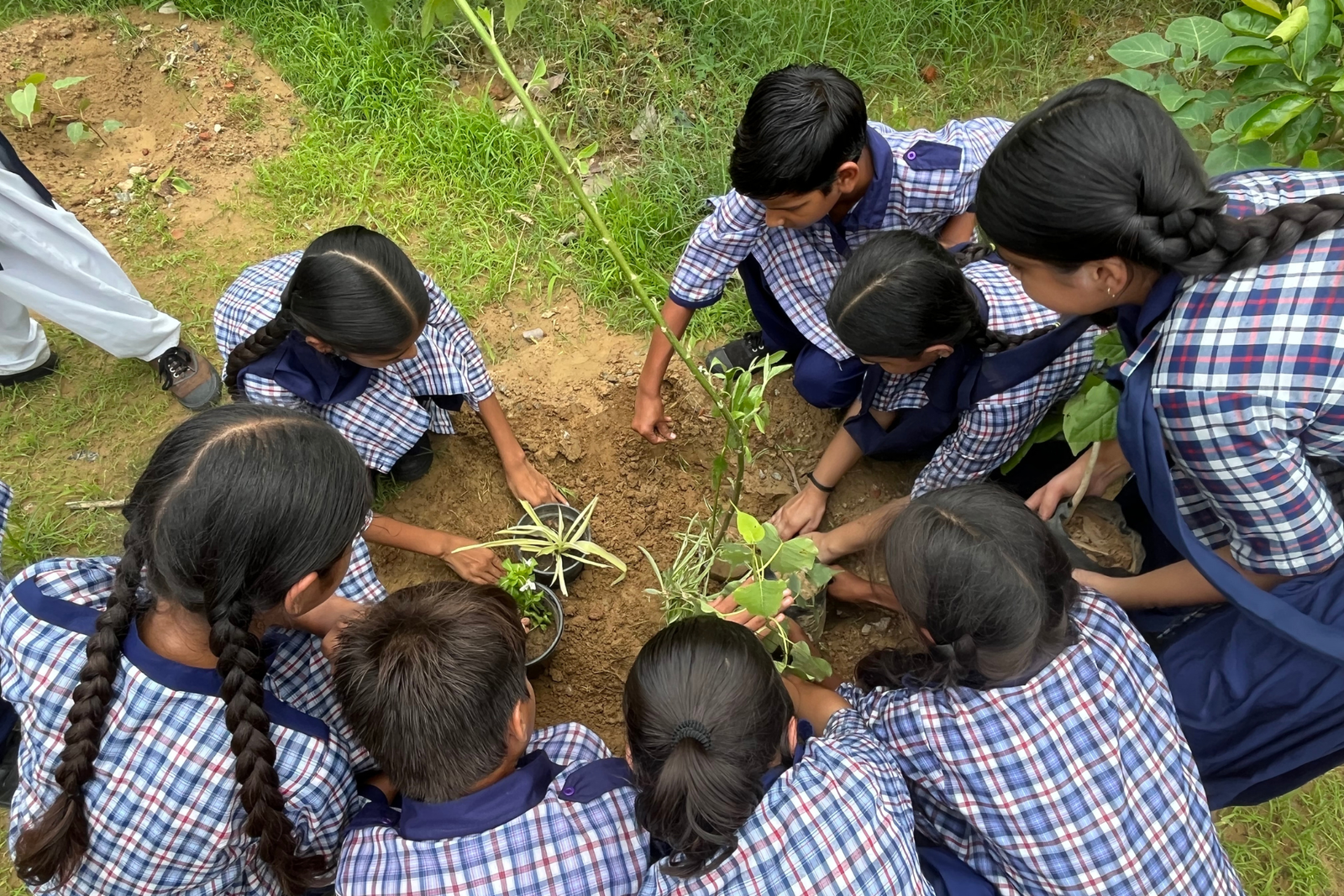
At Nutandhara Foundation, we’re driven by the belief that planting a tree today leads to a greener, healthier tomorrow. Our mission is to
bring urban forests to life in Delhi’s schools through the Miyawaki afforestation method. By turning barren spaces into vibrant green areas,
we’re addressing the urgent challenges of pollution, climate change, and the loss of biodiversity in urban settings.
We are dedicated to reconnecting children with nature, teaching them the value of environmental conservation, and instilling a sense of
responsibility towards the planet. By planting native trees like Neem, Peepal, and Mango, we help restore natural ecosystems, improve air
quality, and create safe habitats for local wildlife such as squirrels, parrots, and more.
Join us in this journey of nurturing nature and safeguarding our planet for the generations to come.
History of the Miyawaki Method
The Miyawaki method is a technique for creating dense, native, and fast-growing forests in small areas, named after its founder, Japanese botanist and plant ecologist Dr. Akira Miyawaki. Dr. Miyawaki’s work was based on his research on Japan’s natural vegetation, which revealed that most of the country’s forests were man-made monocultures of non-native species. He discovered that the most resilient and healthy forests in Japan were the sacred groves around temples and shrines, which contained a diverse mix of native species.
In the 1970s, Miyawaki began developing his method of ecological engineering to restore these lost native forests. His first major trial was with the Nippon Steel Corporation, which wanted to plant forests on embankments around its steelworks. The project was a success and led to the widespread adoption of his method, with Miyawaki and his colleagues planting over 40 million trees in more than 1,700 locations around the world.
Techniques
The Miyawaki method is a multi-step process that focuses on mimicking the layers and density of a natural forest ecosystem. The key techniques include:
- Soil Preparation: The first step is to enrich the soil to create a fertile, fungal-dominant medium. This often involves adding a mixture of organic materials like compost, cocopeat, and various manures.
- Species Selection: The method uses potential natural vegetation (PNV) to select a diverse range of native species that would naturally thrive in the area. This typically involves identifying different layers of a forest ecosystem: canopy, sub-canopy, shrub, and groundcover.
- Dense Planting: Saplings are planted very close together, with 2 to 4 trees per square meter. This high density creates immediate competition for sunlight, forcing the trees to grow faster and taller. It also helps to suppress weeds and create a self-sustaining ecosystem more quickly.
- Mulching and Support: The planted area is covered with a thick layer of mulch, which helps to retain moisture, prevent weed growth, and enrich the soil. Stakes are often used to support the young saplings.
Maintenance: The forest requires intensive care, including regular watering and weeding, for the first 2-3 years. After this initial period, the forest becomes self-sufficient and requires little to no maintenance.
The Miyawaki method offers a wide array of ecological and environmental benefits:
- Rapid Growth: Miyawaki forests grow up to 10 times faster than conventional plantations, achieving the density and maturity of a natural forest in just 20 to 30 years, compared to the 100-200 years it takes for a naturally regenerating forest.
- High Biodiversity: By planting a diverse mix of native species, the method creates a rich ecosystem that supports a wide variety of flora and fauna, including birds, insects, and small animals.
- Increased Resilience: The diverse and dense nature of these forests makes them more resilient to pests, diseases, and natural disasters like droughts and wildfires.
- Environmental Services: Miyawaki forests are effective in carbon sequestration, air purification, noise reduction, and stormwater management. They also help to reduce the urban heat island effect by providing shade and cooling the surrounding area.
- Cost-Effective and Space-Saving: Since the method can be used in small patches of land, it is a highly effective solution for urban afforestation. Once established, these forests require minimal maintenance, making them a cost-effective long-term solution.
This video provides a tutorial on the Miyawaki method for growing native forests.
Benefits
Join Us Nutandhara in The Fight for Environment
We are helping to refresh nature, supporting eco-awareness and creating green futures for new generations to come. Be a part of our environmental action for health and fresh nature.
Join Now for a Healthy and Fresh Future.
VISION & MISSION
Purpose and Goals
"Our goals are to create urban forests in Delhi's schools, enhance environmental education, combat pollution, engage communities, promote wildlife habitats and advocate for sustainability."
Our Valuable Team Members
“Our founders and directors are committed conservationists dedicated to creating sustainable natural world through tree planting and animal protection.”



More Than 120+ Partners & Sponsors Join in NGOs Environmental Protections